
16
Nov
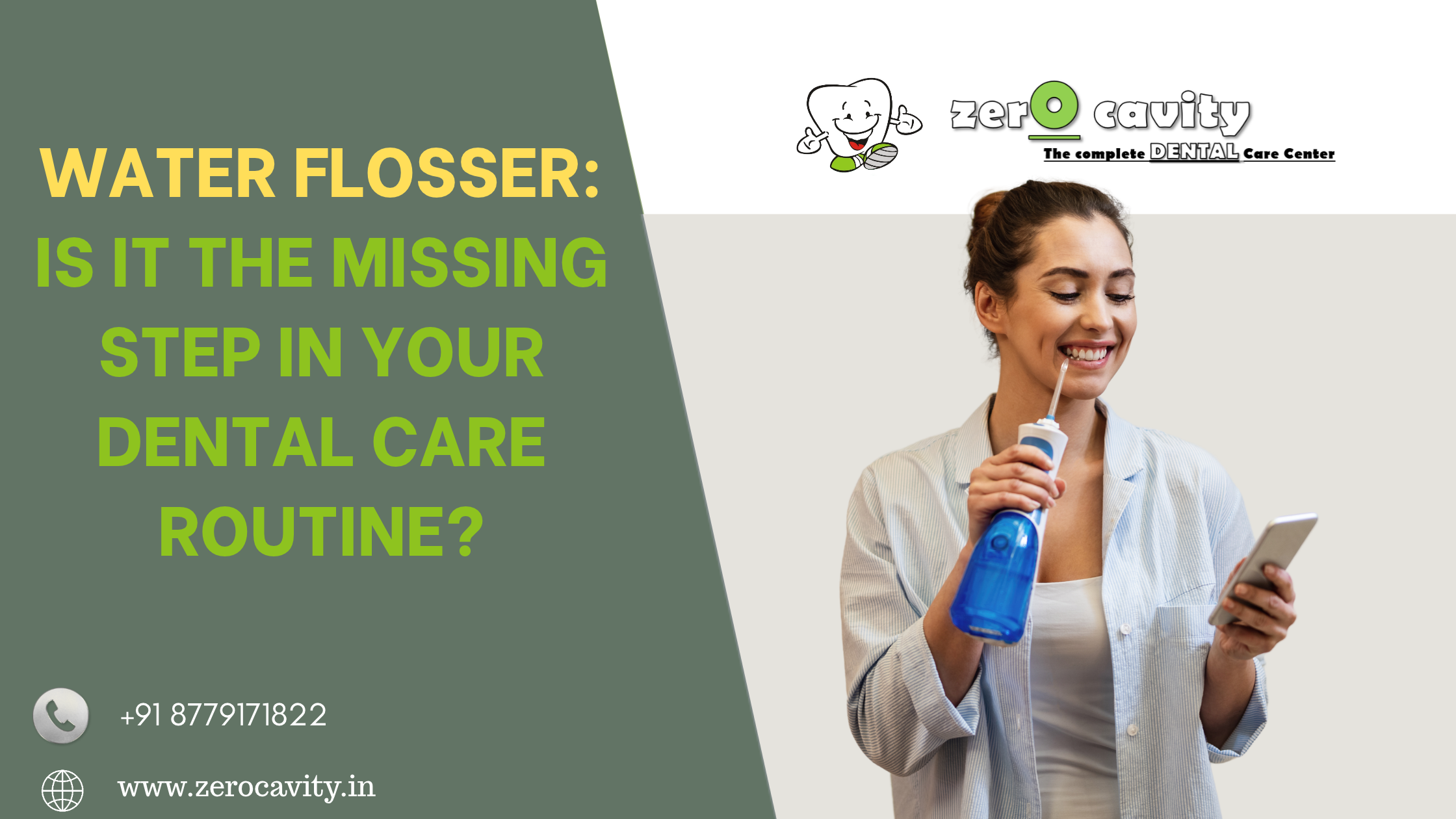
Water Flosser: Is It the Missing Step in Your Dental Care Routine?
You brush your teeth twice a day, use mouthwash, and visit your dentist regularly. But are you cleaning those tiny spaces between your teeth?
Here's something many people don't realise: a toothbrush cannot reach every corner of your mouth. Food particles and plaque can accumulate between teeth and along the gumline, even when you brush regularly.
This is where a water flosser comes in!
A water flosser is a modern oral hygiene device that uses a gentle stream of pressurised water to clean between teeth and around the gums. It can make your dental care routine easier and help you maintain healthier gums.
Let's understand how it works and why your dentist might recommend adding one to your daily routine.
What Is a Water Flosser?
Think of it as a mini water cleaner for your teeth!
A water flosser is an electronic device that directs a controlled stream of water between your teeth and along your gumline. The water helps flush out trapped food particles and disrupt plaque in areas that are difficult to reach with a toothbrush. Think of it as pichkari for your teeth
Unlike traditional dental floss, which uses a thin thread to clean between teeth, a water flosser uses water pressure.
Both methods help clean between teeth, but they work in different ways.
5 Benefits of Using a Water Flosser
So, why are more people adding water flossers to their dental care routines? Here are some important benefits.
1. Helps Reduce Plaque Buildup
2. Supports Healthier Gums
3. Makes Cleaning Around Braces Easier
4. Helps Maintain Dental Implants and Bridges
5. A Convenient Option for People Who Find Flossing Difficult
Let's face it: traditional flossing isn't easy for everyone.
People with limited hand mobility or those who struggle to handle dental floss may find a water flosser easier to use.
It can be a practical way to improve interdental cleaning habits and maintain better oral hygiene.
Water Flosser vs Traditional Dental Floss: Do You Need Both?
This is one of the most common questions people have.
Both traditional dental floss and water flossers help clean between teeth, but they do so differently.
Traditional dental floss
- Uses a thin thread to physically clean the surfaces between teeth.
- Helps remove plaque and trapped food particles.
- Requires proper technique to be effective.
Water flosser
- Uses a controlled stream of water to clean between teeth and along the gumline.
- Helps flush away food debris and reduce plaque.
- Can be particularly convenient around braces, implants, and other dental restorations.
So, which one is better?
There isn't a one-size-fits-all answer.
Research shows that water flossers can be effective in reducing plaque and gingival inflammation. However, traditional floss also has an important role in interdental cleaning.
For some people, a water flosser may be a helpful alternative when traditional flossing is difficult. For others, using both methods may be beneficial.
The best choice depends on your dental condition, oral hygiene needs, and your dentist's recommendation.
Who Can Benefit from a Water Flosser?
A water flosser can be particularly useful for:
- People wearing braces or other orthodontic appliances.
- Individuals with dental implants, crowns, and bridges.
- People who struggle with traditional flossing.
- Individuals looking to improve their gum health.
- Those who want to make interdental cleaning easier and more convenient.
However, not everyone needs the same oral hygiene routine. Your dentist can help determine whether a water flosser is right for you.
Tips for Using a Water Flosser Correctly
To get the best results, keep these simple tips in mind:
- Start with a low-pressure setting, especially if you're using it for the first time.
- Follow the gumline slowly rather than rushing through the process.
- Use the device regularly as part of your oral hygiene routine.
- Clean the water reservoir and nozzle as instructed by the manufacturer.
- If you experience persistent bleeding, pain, or discomfort, consult your dentist.
Remember, a water flosser works best when used correctly and consistently.
The Bottom Line: A Healthier Smile Needs More Than Just Brushing!
Brushing twice a day is important, but cleaning between your teeth is equally essential for good oral health.
As dentists, we recommend water flossers as a useful addition to your daily oral hygiene routine, particularly for patients who have braces, dental implants, bridges,full mouth rehabilitation or difficulty using traditional floss.
However, it is important to understand that a water flosser should not be considered a complete replacement for conventional thread floss. Both methods work differently, and traditional floss plays an important role in cleaning the surfaces between teeth.
For optimal oral hygiene, continue using regular dental floss as advised by your dentist. Your dentist can help you choose the right combination of cleaning methods based on your individual dental needs.
Remember, a water flosser complements your oral care routine; it doesn't replace the fundamentals!
So, the next time you brush your teeth, remember: don't just clean what you can see. Give those hard-to-reach spaces some attention too
And when in doubt, ask your dentist which interdental cleaning method is best for your smile.
Contact Zero Cavity Dental Clinic:
📞 Call or WhatsApp: +91 87791 71822
🌐 Website: www.zerocavity.in
📍 Find us in Matunga: Google Maps Location
© Copyright
Zero Cavity Dental Clinic. All Rights Reserved. | Powered By  | Privacy Policy | T&C